Social Innovation Trend Canvas
-
Bioengineering new pollution sensors — August 15, 2010
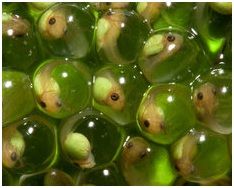 The latest issue of Proceedings of the National Academy of Sciences reports research led by bioengineer Shoji Takeuchi at the University of Tokyo's Institute of Industrial Science. Specially-treated frog eggs were injected into a compact robot smell sensor to give it a sense of smell far more sensitive than electronic sniffers available today.
This offers potential applications in portable robotic systems, which will be able to monitor hard-to-detect polluting gases and distinguish between closely related chemicals. This technology is however expected to only be commercialised in 15 years.
The latest issue of Proceedings of the National Academy of Sciences reports research led by bioengineer Shoji Takeuchi at the University of Tokyo's Institute of Industrial Science. Specially-treated frog eggs were injected into a compact robot smell sensor to give it a sense of smell far more sensitive than electronic sniffers available today.
This offers potential applications in portable robotic systems, which will be able to monitor hard-to-detect polluting gases and distinguish between closely related chemicals. This technology is however expected to only be commercialised in 15 years.
40 American billionaires sign the Giving Pledge — August 1, 2010
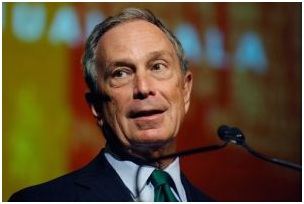 Forty of America’s richest families have committed to the Giving Pledge, an effort by Bill and Melinda Gates and Warren Buffett have recently contacted between 70 and 80 American billionaires in the last 6 weeks to commit to a Giving Pledge to donate at least half their money to charity. Their success rate to date has been about 50 percent, and they will be meeting with some of China’s and India’s wealthiest people in late September 2010 and March 2011.
Among the forty of America’s richest families are New York Mayor Michael R. Bloomberg; eBay founder Pierre Omidyar and his wife, Pam; CNN founder Ted Turner; energy investor John Arnold and his wife Laural media executive Barry Diller and his wife; designer Diane von Furstenberg; investor Ronald O. Perelman; businessman George B. Kaiser; financier Kenneth G. Langone; and Oracle founder Larry Ellison.
The Gateses and Mr. Buffett have asked Giving Pledge members to write a letter describing their thinking on philanthropy as an example to others, published on http://givingpledge.org
Forbes magazine estimates the net worth of donors who have so far committed to giving away a share of their wealth totals more than $200-billion.
Forty of America’s richest families have committed to the Giving Pledge, an effort by Bill and Melinda Gates and Warren Buffett have recently contacted between 70 and 80 American billionaires in the last 6 weeks to commit to a Giving Pledge to donate at least half their money to charity. Their success rate to date has been about 50 percent, and they will be meeting with some of China’s and India’s wealthiest people in late September 2010 and March 2011.
Among the forty of America’s richest families are New York Mayor Michael R. Bloomberg; eBay founder Pierre Omidyar and his wife, Pam; CNN founder Ted Turner; energy investor John Arnold and his wife Laural media executive Barry Diller and his wife; designer Diane von Furstenberg; investor Ronald O. Perelman; businessman George B. Kaiser; financier Kenneth G. Langone; and Oracle founder Larry Ellison.
The Gateses and Mr. Buffett have asked Giving Pledge members to write a letter describing their thinking on philanthropy as an example to others, published on http://givingpledge.org
Forbes magazine estimates the net worth of donors who have so far committed to giving away a share of their wealth totals more than $200-billion.
Nike Creates Worker Relief Fund — July 30, 2010
 In January 2009, 1,800 laborers lost their jobs in Honduras when two local factories that made shirts for the U.S. sports-apparel giant Nike, Hugger and Vision Tex, suddenly closed their doors and did not pay workers the $2 million in severance and other unemployment aid they were due by a law left unenforced. Politicians in many developing countries get elected by writing strong labor laws, but are concerned about repelling FDI and therefore allow weak enforcement of those laws.
Nike initially only lamented the situation — while insisting that it wasn't responsible for the actions of the plants it contracts. Only under pressure from fair-labor groups, the Oregon-based company announced an agreement with one of Honduras' largest trade unions this week to create a $1.54 million "workers relief fund" for the factory employees laid off in 2009. Under the deal, Nike says it will work with its suppliers in Honduras to get still unemployed workers vocational training and hiring priorities as jobs open up. The value of Nike's total contribution to the Honduran workers will probably be more than $2 million. But what matters more than the money — petty cash compared to Nike's $19 billion in revenues last year — is the precedent, one that could help make globalization a fairer game.
Groups like the United Students Against Sweatshops and the Worker Rights Consortium put pressure on Nike by organising demonstrations and convincing U.S. universities whose athletic programs and campus shops buy Nike shoes and clothes to threaten cancellation of their contracts with Nike unless it did something to rectify the Honduras situation.
Nike may now require all its subcontracted factories worldwide set aside escrow funds to make sure that severance and unemployment obligations are met, which may create a precedent for other companies to follow its lead.
In January 2009, 1,800 laborers lost their jobs in Honduras when two local factories that made shirts for the U.S. sports-apparel giant Nike, Hugger and Vision Tex, suddenly closed their doors and did not pay workers the $2 million in severance and other unemployment aid they were due by a law left unenforced. Politicians in many developing countries get elected by writing strong labor laws, but are concerned about repelling FDI and therefore allow weak enforcement of those laws.
Nike initially only lamented the situation — while insisting that it wasn't responsible for the actions of the plants it contracts. Only under pressure from fair-labor groups, the Oregon-based company announced an agreement with one of Honduras' largest trade unions this week to create a $1.54 million "workers relief fund" for the factory employees laid off in 2009. Under the deal, Nike says it will work with its suppliers in Honduras to get still unemployed workers vocational training and hiring priorities as jobs open up. The value of Nike's total contribution to the Honduran workers will probably be more than $2 million. But what matters more than the money — petty cash compared to Nike's $19 billion in revenues last year — is the precedent, one that could help make globalization a fairer game.
Groups like the United Students Against Sweatshops and the Worker Rights Consortium put pressure on Nike by organising demonstrations and convincing U.S. universities whose athletic programs and campus shops buy Nike shoes and clothes to threaten cancellation of their contracts with Nike unless it did something to rectify the Honduras situation.
Nike may now require all its subcontracted factories worldwide set aside escrow funds to make sure that severance and unemployment obligations are met, which may create a precedent for other companies to follow its lead.Google to use wind energy — July 15, 2010
 Google energy unit has entered into a deal to buy wind power from NextEra Energy Inc for the next 20 years to power its data centers. The deal comes less than three months after the giant Silicon Valley Internet search company invested US$38.8 million (S$53.5 million) in two wind farms in North Dakota, developed by NextEra Energy Resources, that generate enough energy to power more than 55,000 homes.
Geothermal energy set to grow in India — July 1, 2010
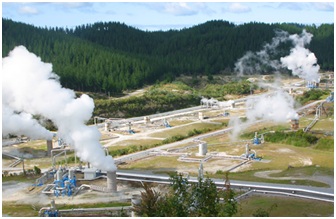 India’s The Ministry of New & Renewable Energy has identified Gujarat as one of the states with potential for setting up geothermal power plants.
Gujarat’s Chief Minister, Narendra Modi, has announced that a policy is being drafted to promote geothermal energy.
Geothermal energy is produced by tapping heat contained in rocks and water deep underground.
Since 2009, Gujarat had set a policy for developing solar energy. The Gujarat Energy Development Agency reports that 716 megawatts in solar projects have so far been awarded to companies.
India’s The Ministry of New & Renewable Energy has identified Gujarat as one of the states with potential for setting up geothermal power plants.
Gujarat’s Chief Minister, Narendra Modi, has announced that a policy is being drafted to promote geothermal energy.
Geothermal energy is produced by tapping heat contained in rocks and water deep underground.
Since 2009, Gujarat had set a policy for developing solar energy. The Gujarat Energy Development Agency reports that 716 megawatts in solar projects have so far been awarded to companies. Scotland on track to have 80% of energy from renewables by 2020 — June 30, 2010
Scotland is surrounded by some of the best wave energy potential in the world, and the country is a world leader in developing wave energy at the prototype level. Currently five of the applications being processed are for hydro energy, while 25 are for (on-shore) wind. Scotland has 7 Gigawatts of renewable power online or in process, and is on target to meet its ambitious goal of getting 31% of its electricity from renewable energy by 2011, and a staggering 80% by 2020, thirty years ahead of the world. Scotland was even able to export 24% to the UK, contributing to a sustainable economic growth with green jobs to match. Renewable energy production grew by 20% overall in 2009 to 10,744 Gigawatt hours, which included a 37% rise in wind, solar and wave energy. The Scottish Government’s next target is to meet 80% of electricity demand from renewables by 2020, a solid 30 years ahead of most nations’ goals.
Smart Grid Analytics from Oracle — June 15, 2010
 The rising popularity of smart energy meters expands consumption data by 1,000 percent or more, and utilities and consumers alike are finding a need to effectively manage this massive volume of data.
To this end, Oracle will release Oracle Business Intelligence for Utilities, an analytics product that helps utilities access, organize and use smart meter and related smart grid data.
This pre-built solution includes extractors and schema that pull data from specific Oracle Utilities production applications, and uses and graphical dashboards that analyze and summarize information in charts, lists, maps and alerts.
The rising popularity of smart energy meters expands consumption data by 1,000 percent or more, and utilities and consumers alike are finding a need to effectively manage this massive volume of data.
To this end, Oracle will release Oracle Business Intelligence for Utilities, an analytics product that helps utilities access, organize and use smart meter and related smart grid data.
This pre-built solution includes extractors and schema that pull data from specific Oracle Utilities production applications, and uses and graphical dashboards that analyze and summarize information in charts, lists, maps and alerts.
Marriott launches sustainable seafood program — June 1, 2010
 Marriott International launched a sustainable seafood program called "Future Fish" in June 2010 making it the first, large global hotel chain to adopt a sustainable seafood policy in response to declining global fish stocks.
Marriott's approximately 780 full-service hotels are expected to source at least half percent of their seafood from certified sustainable, responsible fisheries and aquaculture farms in 2011.
Individual chefs and guests alike have been expressing concern over their seafood purchases. Marriott's move towards sustainable seafood will influence what you can order in Renaissance, Marriott, JW Marriott and Ritz-Carlton hotels. For instance, most of its hotels have removed blue fin tuna and Atlantic cod, and also shifted to sustainable salmon. The Marriott hotels in Hong Kong gave guests a taste of sustainable seafood offerings, such as abalaone and mizuna salad, and lemongrass-cured Alaskan salmon.
Marriott is one of the first global international chains to have calculated its carbon footprint and launched an environmental strategy to address climate change. It has set out specific new steps it can take in five key areas: water, waste and energy; supply chain; green buildings; helping protect the rainforest; and employee and guest engagement.
Marriott International launched a sustainable seafood program called "Future Fish" in June 2010 making it the first, large global hotel chain to adopt a sustainable seafood policy in response to declining global fish stocks.
Marriott's approximately 780 full-service hotels are expected to source at least half percent of their seafood from certified sustainable, responsible fisheries and aquaculture farms in 2011.
Individual chefs and guests alike have been expressing concern over their seafood purchases. Marriott's move towards sustainable seafood will influence what you can order in Renaissance, Marriott, JW Marriott and Ritz-Carlton hotels. For instance, most of its hotels have removed blue fin tuna and Atlantic cod, and also shifted to sustainable salmon. The Marriott hotels in Hong Kong gave guests a taste of sustainable seafood offerings, such as abalaone and mizuna salad, and lemongrass-cured Alaskan salmon.
Marriott is one of the first global international chains to have calculated its carbon footprint and launched an environmental strategy to address climate change. It has set out specific new steps it can take in five key areas: water, waste and energy; supply chain; green buildings; helping protect the rainforest; and employee and guest engagement.
Dell trims computer energy use by a quarter — May 30, 2010
 Dell has achieved its goal of reducing its desktop and laptop computers' energy consumption by 25 percent by using Energy Smart fans, improved circuit design, power management and other technologies, along with more-efficient processors, power supplies, memory and other parts from suppliers. All Dell laptops are also now made exclusively with mercury-free LED screens, another goal the company set in 2008.
 Ecotourism in Egypt — May 15, 2010
 Egypt’s tourism minister Zoheir Garrana is counting on ecotourism to boost the country's long-term prospects.
The tourism ministry informed that the Egyptian Red sea resort of Sharm el-Sheikh will be under consideration first to offer ecotourism. Reduced water consumption, reduced wastes and other eco-friendly services that will cut off biodiversity degradation, mitigate greenhouse gas emissions would help turn the city into a top 'green' destination.
Apart from typical eco-lodges, desert camp stays, and selling handicrafts, the ministry is keen to leverage on the skills and knowledge of Egypt’s Bedouins and Nubian tribes, creating jobs such as as safari guides, that will not disrupt their heritage and lifestyles.
Egypt’s tourism minister Zoheir Garrana is counting on ecotourism to boost the country's long-term prospects.
The tourism ministry informed that the Egyptian Red sea resort of Sharm el-Sheikh will be under consideration first to offer ecotourism. Reduced water consumption, reduced wastes and other eco-friendly services that will cut off biodiversity degradation, mitigate greenhouse gas emissions would help turn the city into a top 'green' destination.
Apart from typical eco-lodges, desert camp stays, and selling handicrafts, the ministry is keen to leverage on the skills and knowledge of Egypt’s Bedouins and Nubian tribes, creating jobs such as as safari guides, that will not disrupt their heritage and lifestyles.