Social Innovation Trend Canvas
-
Energy efficiency ratings for Indian cars — December 31, 2010
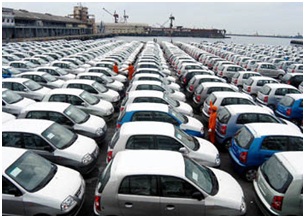 The Indian government is coming up with star labelling for the automobile sector in order to stipulate strict fuel efficiency norms for automobiles. The Bureau of Energy Efficiency (BEE), a statutory body under the power ministry mandated mandated by the Prime Minister's Office to stipulate the norms under the Energy Conservation Act, together with the Ministry of Road and Surface Transport has finalised Corporate Average Fuel Efficiency -- where the fuel economy of an entire fleet of a car manufacturing company is measured. To make it easy for the automobile industry to adopt the standards, the BEE has planned to harmonise the energy efficiency labelling with emission norms.
 Read more...
Desalination for China’s water crisis — December 30, 2010
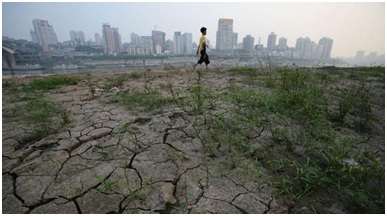 China faces a grave water shortage issue. The Chinese government has moved to promote water conservation in the last few years. Its 11th five-year plan for water conservation proposes detailed targets, including increasing the agricultural water conservation rate to 50 percent from 45 percent between 2005 and 2010. Despite billions of dollars spent on damming rivers, building reservoirs and digging deeper wells, farmers in the north toil on parched land while hundreds of cities across the country face water shortages and deteriorating water quality.
 Read more...
Green incentive system for Korea — December 27, 2010
 President Lee Myung-bak stressed the importance of green growth during briefing sessions with the ministries of land, transport and maritime affairs environment and agriculture on Monday. He said that Korea would become a more vibrant country when the Four Major Rivers Restoration Project is completed next year emphasizing that eco-friendly development would not only bring economic gains, but also emotional changes when people see the refurbished rivers.
The environment ministry also announced its plan to establish a "green incentive system" to pursue a low-carbon lifestyle. Green credit chips will be embedded into credit cards so that cardholders can save green points when they use public transportation or buy government-approved green products, such as recycled goods.
Green credits will also be given to people putting in efforts in their daily lives such as riding bicycles or using mugs at coffee shops instead of disposable cups. In line with an attempt to reduce carbon dioxide emissions by 30 percent by the year 2020, mass production of electric vehicles will begin next year and tax benefits will be provided to drivers of low-carbon cars.
And later in the day, the Ministry for Food, Agriculture, Forestry and Fisheries set out plans to reinforce its risk management system regarding the recent outbreak of foot and mouth disease in the country and to stabilize prices of farm products.
President Lee Myung-bak stressed the importance of green growth during briefing sessions with the ministries of land, transport and maritime affairs environment and agriculture on Monday. He said that Korea would become a more vibrant country when the Four Major Rivers Restoration Project is completed next year emphasizing that eco-friendly development would not only bring economic gains, but also emotional changes when people see the refurbished rivers.
The environment ministry also announced its plan to establish a "green incentive system" to pursue a low-carbon lifestyle. Green credit chips will be embedded into credit cards so that cardholders can save green points when they use public transportation or buy government-approved green products, such as recycled goods.
Green credits will also be given to people putting in efforts in their daily lives such as riding bicycles or using mugs at coffee shops instead of disposable cups. In line with an attempt to reduce carbon dioxide emissions by 30 percent by the year 2020, mass production of electric vehicles will begin next year and tax benefits will be provided to drivers of low-carbon cars.
And later in the day, the Ministry for Food, Agriculture, Forestry and Fisheries set out plans to reinforce its risk management system regarding the recent outbreak of foot and mouth disease in the country and to stabilize prices of farm products.India’s Finance Minister prefers voluntary CSR initiatives — December 17, 2010
 Indian Finance Minister Pranab Mukherjee said he prefers companies to voluntarily adopt good governance and corporate social responsibility (CSR) practices, rather than be legally compelled to do so. Such voluntary contributions should be recognised and rewarded.
Highlighting the responsibility of companies to participate in India’s great infrastructure development story, Mukherjee wanted them to ensure progress in health and education to make growth inclusive.
“The key to that is corporate governance. We need to introspect and understand that better governance standards cannot be imposed by the law or by courts”, the minister said, adding that unless Indian companies were willing partners in inclusive growth, corporate governance could not happen.
Mukherjee said the post of independent director on a company’s board should not be seen as an ornamental post or a superannuation park. He distinguished between ethical party transactions and the ones that jeopardised minority shareholders’ interest for the private ones of the promoter.
The minister’s views come at a time when the parliamentary panel that examined the draft Companies Bill suggested introduction of a mandatory CSR levy of two per cent of net profit, under the proposed law.
CSR, he said, was more than just an allocation of funds. “When a pharmaceutical company invents, produces and sells life-saving medicines at reasonable cost, that itself becomes CSR. But if the company tries to maximise the cost of medicines sold to the people, it exists just for itself,” Mukherjee said.
Indian Finance Minister Pranab Mukherjee said he prefers companies to voluntarily adopt good governance and corporate social responsibility (CSR) practices, rather than be legally compelled to do so. Such voluntary contributions should be recognised and rewarded.
Highlighting the responsibility of companies to participate in India’s great infrastructure development story, Mukherjee wanted them to ensure progress in health and education to make growth inclusive.
“The key to that is corporate governance. We need to introspect and understand that better governance standards cannot be imposed by the law or by courts”, the minister said, adding that unless Indian companies were willing partners in inclusive growth, corporate governance could not happen.
Mukherjee said the post of independent director on a company’s board should not be seen as an ornamental post or a superannuation park. He distinguished between ethical party transactions and the ones that jeopardised minority shareholders’ interest for the private ones of the promoter.
The minister’s views come at a time when the parliamentary panel that examined the draft Companies Bill suggested introduction of a mandatory CSR levy of two per cent of net profit, under the proposed law.
CSR, he said, was more than just an allocation of funds. “When a pharmaceutical company invents, produces and sells life-saving medicines at reasonable cost, that itself becomes CSR. But if the company tries to maximise the cost of medicines sold to the people, it exists just for itself,” Mukherjee said.IBM urban analytics testbed in Singapore — December 17, 2010
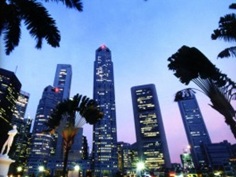 World renowned for its urban planning accomplishments, Singapore is about to get even smarter with cutting edge collaborative research from IBM.
IBM Singapore launched its seventh Smarter Cities Research Collaboratory with Singapore’s agencies, including the Economic Development Board (EDB) and Land Transport Authority (LTA), and Nanyang Technological University (NTU). It leverages on Singapore’s extensive sensor network to provide data for analysis, and will focus on using advanced technology on analytics and optimisation to improve Singapore’s transport, water and energy systems.
These may result in systems that that react to real-time data on traffic conditions can improve efficiency by diverting traffic around accidents or improving response time for emergency services; smart grids that can accommodate electric vehicles and improve energy efficiency in buildings; and more efficient water transportation and treatment systems.
Dr Beh Swan Gin, managing director of EDB, announced the initiative as a welcome addition to Singapore’s Living Labs programme that builds public-private partnerships to improve urban planning and growth. “The IBM Smarter Cities Research Collaboratory will enable IBM to design, develop and test innovative urban technological solutions for global markets. By working with public agencies like LTA, IBM will be able to work on real-life urban problems to help create relevant, workable solutions,” he said.
Solutions developed here will be adapted to help other cities in Asia and around the world. By 2025, Asia will have 16 of the world’s top 25 megacities and over half of the world’s population will live in urban areas.
World renowned for its urban planning accomplishments, Singapore is about to get even smarter with cutting edge collaborative research from IBM.
IBM Singapore launched its seventh Smarter Cities Research Collaboratory with Singapore’s agencies, including the Economic Development Board (EDB) and Land Transport Authority (LTA), and Nanyang Technological University (NTU). It leverages on Singapore’s extensive sensor network to provide data for analysis, and will focus on using advanced technology on analytics and optimisation to improve Singapore’s transport, water and energy systems.
These may result in systems that that react to real-time data on traffic conditions can improve efficiency by diverting traffic around accidents or improving response time for emergency services; smart grids that can accommodate electric vehicles and improve energy efficiency in buildings; and more efficient water transportation and treatment systems.
Dr Beh Swan Gin, managing director of EDB, announced the initiative as a welcome addition to Singapore’s Living Labs programme that builds public-private partnerships to improve urban planning and growth. “The IBM Smarter Cities Research Collaboratory will enable IBM to design, develop and test innovative urban technological solutions for global markets. By working with public agencies like LTA, IBM will be able to work on real-life urban problems to help create relevant, workable solutions,” he said.
Solutions developed here will be adapted to help other cities in Asia and around the world. By 2025, Asia will have 16 of the world’s top 25 megacities and over half of the world’s population will live in urban areas.
ADB commits $250 Million to alleviate Microfinance Risk — December 14, 2010
 Microfinancing has recently seen an increasing debt burden, in the backdrop of scandals ranging from accusations of exploitation to suicides of delinquent lenders who are unable to cope with peer bullying when they cannot repay loans.
The Asian Development Bank has $1.9 billion to microfinance projects since 1988. To shoulder lending burdens across Asia, the Asian Development Bank has a regional $250 million risk participation program and fund. Under the new scheme, ADB will assume 50% of the default risk on loans and partner with local MFIs that are already operating micro-lending. The partnership will allow MFIs to increase lending to greater numbers of borrowers without assuming all of the risk.
The fund will target women, poor households, and struggling small enterprises--the same target groups that many MFIs focus on. But in doing so, ADB may have missed an opportunity to innovate and extend their reach to those who are even more neglected, such as those in extreme rural conditions and those who don't participate in organized networks, such as women's groups.
Recently, it separately committed $75 million for a private equity fund, managed by Equator Capital Partners, to take equity stakes worth $2 – 10 mn each in regulated, small microfinancing lenders to expand microfinance and small bank lending to poor, underserved groups in Asia and Africa, with ADB's contribution solely for use in its developing member countries.
ADB's participation will help leverage more investment from the commercial market, and provide a model for other private equity funds to follow in the small lenders market. It expects average investments to last about 5 years, with key target markets including Bangladesh, the People's Republic of China, India, Indonesia, Pakistan, the Philippines, Sri Lanka, Thailand and Viet Nam.
Microfinancing has recently seen an increasing debt burden, in the backdrop of scandals ranging from accusations of exploitation to suicides of delinquent lenders who are unable to cope with peer bullying when they cannot repay loans.
The Asian Development Bank has $1.9 billion to microfinance projects since 1988. To shoulder lending burdens across Asia, the Asian Development Bank has a regional $250 million risk participation program and fund. Under the new scheme, ADB will assume 50% of the default risk on loans and partner with local MFIs that are already operating micro-lending. The partnership will allow MFIs to increase lending to greater numbers of borrowers without assuming all of the risk.
The fund will target women, poor households, and struggling small enterprises--the same target groups that many MFIs focus on. But in doing so, ADB may have missed an opportunity to innovate and extend their reach to those who are even more neglected, such as those in extreme rural conditions and those who don't participate in organized networks, such as women's groups.
Recently, it separately committed $75 million for a private equity fund, managed by Equator Capital Partners, to take equity stakes worth $2 – 10 mn each in regulated, small microfinancing lenders to expand microfinance and small bank lending to poor, underserved groups in Asia and Africa, with ADB's contribution solely for use in its developing member countries.
ADB's participation will help leverage more investment from the commercial market, and provide a model for other private equity funds to follow in the small lenders market. It expects average investments to last about 5 years, with key target markets including Bangladesh, the People's Republic of China, India, Indonesia, Pakistan, the Philippines, Sri Lanka, Thailand and Viet Nam.LG to green its suppliers — December 13, 2010
 LG Electronics announced that it will start purchasing more parts and supplies from its 1,500 top vendors in terms of energy consumption, as part of a corporate campaign to reduce greenhouse gases to accelerate eco-friendly growth.
This year, LG Electronics worldwide plants caused about 1.4 million tons of greenhouse gas emissions. It has however discovered that the 12 million tonne carbon footprint of its vendors was about eight times as high as its own.
This led to its LGE Green Program Plus campaign, which will see 200 vendors first selected before the year is out to make sure they set goals for carbon reduction, and deliver on their pledges.
The electronics company and world’s third largest phonemaker said it will purchase 50 trillion won ($57.3 billion) or more worth of parts from vendors who have set up carbon reduction goals by 2020.
LG Electronics announced that it will start purchasing more parts and supplies from its 1,500 top vendors in terms of energy consumption, as part of a corporate campaign to reduce greenhouse gases to accelerate eco-friendly growth.
This year, LG Electronics worldwide plants caused about 1.4 million tons of greenhouse gas emissions. It has however discovered that the 12 million tonne carbon footprint of its vendors was about eight times as high as its own.
This led to its LGE Green Program Plus campaign, which will see 200 vendors first selected before the year is out to make sure they set goals for carbon reduction, and deliver on their pledges.
The electronics company and world’s third largest phonemaker said it will purchase 50 trillion won ($57.3 billion) or more worth of parts from vendors who have set up carbon reduction goals by 2020.
San Francisco aims for 100% Green Power by 2020 — November 1, 2010
 The Sidney Frank Foundation has provided a $250,000 grant to analyze how to power the San Francisco's 950 MW peak energy use with only renewable energy by 2020.
The city's Sunset Reservoir Solar Project, a 5 MW solar photovoltaic system on top of the city's largest reservoir, is almost completed, with that project alone tripling San Francisco's municipal solar generation.
Utility provider PG&E currently produces 16% of its energy from renewable sources, and has plans to expand. San Francisco plans to launch a 1 MW to 3 MW wave energy project in 2011, which may be the precursor to a larger 30 MW to 100 MW wave project. The city also produces 3.5 MW of biogas and 10 MW of distributed solar.
The Sidney Frank Foundation has provided a $250,000 grant to analyze how to power the San Francisco's 950 MW peak energy use with only renewable energy by 2020.
The city's Sunset Reservoir Solar Project, a 5 MW solar photovoltaic system on top of the city's largest reservoir, is almost completed, with that project alone tripling San Francisco's municipal solar generation.
Utility provider PG&E currently produces 16% of its energy from renewable sources, and has plans to expand. San Francisco plans to launch a 1 MW to 3 MW wave energy project in 2011, which may be the precursor to a larger 30 MW to 100 MW wave project. The city also produces 3.5 MW of biogas and 10 MW of distributed solar.
Smart Glass for Green Buildings — October 1, 2010
 The $54bn market for green buildings is growing rapidly. According to McGraw Hill Construction, a third of all new non-residential construction is green and non-residential green building developments are expected to triple over the next 5 years. This market is expected to reach $120 - $145 billion in new construction and $14 - $18 billion in major retrofit projects.
Smart glass is for green buildings is gaining in popularity. They can change from clear to tinted automatically, in response to changes in light or temperature. Windows using this “electro-chromic” technology help building owners and operators reduce their heat, cooling and lighting costs, and energy consumption.
For instance, GE organises a $200 million Ecomagination Challenge, inviting ideas on building the next-generation power grid. Last month, it named Soladigm, a smart glass maker, one of the first 12 winners of the innovation competition. Soladigm’s latest round of fundings will help it build and launch its high-volume commercial operations and develop sales and marketing channels. Earlier this month, smart glass maker Sage Electrochromics, also raised an $80 million investment from construction materials maker Saint-Gobain.
The $54bn market for green buildings is growing rapidly. According to McGraw Hill Construction, a third of all new non-residential construction is green and non-residential green building developments are expected to triple over the next 5 years. This market is expected to reach $120 - $145 billion in new construction and $14 - $18 billion in major retrofit projects.
Smart glass is for green buildings is gaining in popularity. They can change from clear to tinted automatically, in response to changes in light or temperature. Windows using this “electro-chromic” technology help building owners and operators reduce their heat, cooling and lighting costs, and energy consumption.
For instance, GE organises a $200 million Ecomagination Challenge, inviting ideas on building the next-generation power grid. Last month, it named Soladigm, a smart glass maker, one of the first 12 winners of the innovation competition. Soladigm’s latest round of fundings will help it build and launch its high-volume commercial operations and develop sales and marketing channels. Earlier this month, smart glass maker Sage Electrochromics, also raised an $80 million investment from construction materials maker Saint-Gobain.
Energy from Waste Technology ready for commercialisation — September 30, 2010
 InEn Tec, recently honoured as 2010 Top Innovator by the Wall Street Journal, will soon commercialise new technologies that can transform industrial, household and even medical waste into electricity and fuel for transport.
Continued investment into companies such as InEn Tec and Plasco Energy Group, could lead to the widespread adoption of waste to energy technology and lead the way for cars or houses that are indirectly powered by household waste.
Energy from Waste technologies either combust waste directly, or convert them into liquid or gaseous fuels for combustion. Thermal technologies include gasification; thermal depolymerisation; pyrolysis; and plasma gasification. Non-thermal technologies include anaerobic digestion; fermentation; mechanical biological treatment; and combinations of these technologies.
InEn Tec, recently honoured as 2010 Top Innovator by the Wall Street Journal, will soon commercialise new technologies that can transform industrial, household and even medical waste into electricity and fuel for transport.
Continued investment into companies such as InEn Tec and Plasco Energy Group, could lead to the widespread adoption of waste to energy technology and lead the way for cars or houses that are indirectly powered by household waste.
Energy from Waste technologies either combust waste directly, or convert them into liquid or gaseous fuels for combustion. Thermal technologies include gasification; thermal depolymerisation; pyrolysis; and plasma gasification. Non-thermal technologies include anaerobic digestion; fermentation; mechanical biological treatment; and combinations of these technologies.
