Social Innovation Trend Canvas
-
Is clean energy truly clean? — May 1, 2010
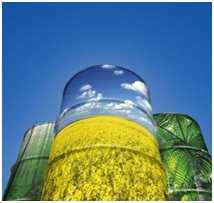 Increased global demand for biofuel, boosted by fluctuating global oil prices and government green mandates, has led to higher global food prices. The plant-based petroleum substitute comes either as bioethanol, from fermented vegetable mass--mainly sugarcane, corn, cassava or potatoes--or as biodiesel, a byproduct of processed plant oils, among them soybean, coconut and canola, and competes against using these produce for food.
Apart from land use conflicts, biofuels are also associated with the destruction of intact ecosystems; biofuel plantations in Brazil and Indonesia have already encroached into pristine forest areas.
Dam reservoirs have permanently flooded farmlands and natural habitats even as they provide hydropower - roughly 20% of the world’s electricity - to communities. The World Commission on Dams Framework (WCD), which reviewed experiences from 1,000 dams in 79 countries, reported that dam-building has physically displaced 40 to 80 million people worldwide. The Three Gorges dam in China, for instance, has displaced more than a million people and affected their agricultural livelihoods, and even led to the extinction of the Yangtze river dolphin after it blocked the tributaries where they nurtured their young.
Large-scale hydropower can drown ecosystems and can be inconvenient during prolonged droughts and dry seasons when rivers dry up. Small-scale or micro-hydro mechanisms are gaining in popularity and could instead be considered, together with a holistic assessment of the economic, environmental, infrastructural, and socio-political impact of the project.
Increased global demand for biofuel, boosted by fluctuating global oil prices and government green mandates, has led to higher global food prices. The plant-based petroleum substitute comes either as bioethanol, from fermented vegetable mass--mainly sugarcane, corn, cassava or potatoes--or as biodiesel, a byproduct of processed plant oils, among them soybean, coconut and canola, and competes against using these produce for food.
Apart from land use conflicts, biofuels are also associated with the destruction of intact ecosystems; biofuel plantations in Brazil and Indonesia have already encroached into pristine forest areas.
Dam reservoirs have permanently flooded farmlands and natural habitats even as they provide hydropower - roughly 20% of the world’s electricity - to communities. The World Commission on Dams Framework (WCD), which reviewed experiences from 1,000 dams in 79 countries, reported that dam-building has physically displaced 40 to 80 million people worldwide. The Three Gorges dam in China, for instance, has displaced more than a million people and affected their agricultural livelihoods, and even led to the extinction of the Yangtze river dolphin after it blocked the tributaries where they nurtured their young.
Large-scale hydropower can drown ecosystems and can be inconvenient during prolonged droughts and dry seasons when rivers dry up. Small-scale or micro-hydro mechanisms are gaining in popularity and could instead be considered, together with a holistic assessment of the economic, environmental, infrastructural, and socio-political impact of the project.The Economics of HIV — April 30, 2010
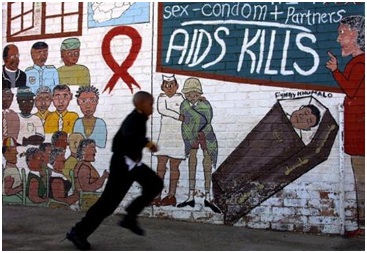 THE International HIV/AIDS Alliance warned on Saturday that the annual cost of tackling the HIV epidemic could balloon to US$35 billion by 2030 if governments fail to invest in efficient, targeted and cost-effective prevention measures. The AIDS virus, which already infects around 33.4 million people across the world, was a 'costly time-bomb' for families, governments and donors. 'For every two people who get treatment, five others get infected. At this rate, spending for HIV will rise from US$13 billion now to between US$19 and US$35 billion in just 20 years time,' said Alvaro Bermejo, executive director of the Alliance.
It has been identified that poverty is perhaps the most important factor in whether inner-city heterosexuals are infected with the AIDS virus, according to the first government study of its kind in the US. The study suggests that HIV is epidemic in certain poverty-stricken urban neighborhoods. And, more significantly, poor heterosexuals in those neighbourhoods were twice as likely to be infected as heterosexuals who lived in the same community but had more money.
This may present an economic lever to slow down the pace of HIV transmission. The World Bank released two studies linking cash payments to Malawian and Tanzanian youths with 'significantly lower' rates of HIV and other sexually transmitted infections. In the first study, a two-year program rewarded young girls in Malawi, rife with poverty and high HIV infection rates, with cash payments for regular school attendance. In Tanzania, the Bank paid young adults in cash to avoid unsafe sex. Both studies showed that payments were successful at reducing transmission rates for HIV among the respondents.
THE International HIV/AIDS Alliance warned on Saturday that the annual cost of tackling the HIV epidemic could balloon to US$35 billion by 2030 if governments fail to invest in efficient, targeted and cost-effective prevention measures. The AIDS virus, which already infects around 33.4 million people across the world, was a 'costly time-bomb' for families, governments and donors. 'For every two people who get treatment, five others get infected. At this rate, spending for HIV will rise from US$13 billion now to between US$19 and US$35 billion in just 20 years time,' said Alvaro Bermejo, executive director of the Alliance.
It has been identified that poverty is perhaps the most important factor in whether inner-city heterosexuals are infected with the AIDS virus, according to the first government study of its kind in the US. The study suggests that HIV is epidemic in certain poverty-stricken urban neighborhoods. And, more significantly, poor heterosexuals in those neighbourhoods were twice as likely to be infected as heterosexuals who lived in the same community but had more money.
This may present an economic lever to slow down the pace of HIV transmission. The World Bank released two studies linking cash payments to Malawian and Tanzanian youths with 'significantly lower' rates of HIV and other sexually transmitted infections. In the first study, a two-year program rewarded young girls in Malawi, rife with poverty and high HIV infection rates, with cash payments for regular school attendance. In Tanzania, the Bank paid young adults in cash to avoid unsafe sex. Both studies showed that payments were successful at reducing transmission rates for HIV among the respondents.Drug affordability in Third World countries — April 15, 2010
 The World Health Organisation reports that some five billion people now live in countries with limited or no access to controlled medicines that relieve pain. Many anti-cancer drugs are also very costly and out of reach of many people. As a result, cancer patients, particularly in developing regions, are in dire need of painkillers and affordable drugs.
Doug Ulman, president of Lance Armstrong’s cancer foundation Livestrong, said cancer experts were working out plans for a pilot scheme in five countries - Rwanda, India, Haiti, Malawi and Jordan - to procure cancer drugs from pharmaceutical companies at lower prices. 'It's all about proving that you can deliver that great care at a lower cost in a developing country ... for a lot of these companies, it's a new market,' Mr Ulman said.
There were 12.7 million new cases of cancer and 7.6 million cancer deaths in 2008, according to the International Agency for Research on Cancer. There will be an estimated 15 million new cases in 2020, with the developing world carrying 60 per cent of that burden.
The World Health Organisation reports that some five billion people now live in countries with limited or no access to controlled medicines that relieve pain. Many anti-cancer drugs are also very costly and out of reach of many people. As a result, cancer patients, particularly in developing regions, are in dire need of painkillers and affordable drugs.
Doug Ulman, president of Lance Armstrong’s cancer foundation Livestrong, said cancer experts were working out plans for a pilot scheme in five countries - Rwanda, India, Haiti, Malawi and Jordan - to procure cancer drugs from pharmaceutical companies at lower prices. 'It's all about proving that you can deliver that great care at a lower cost in a developing country ... for a lot of these companies, it's a new market,' Mr Ulman said.
There were 12.7 million new cases of cancer and 7.6 million cancer deaths in 2008, according to the International Agency for Research on Cancer. There will be an estimated 15 million new cases in 2020, with the developing world carrying 60 per cent of that burden.
Electricity efficiency tips from Google — April 1, 2010
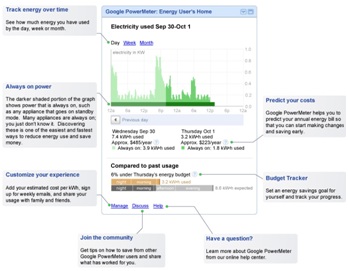 Google.org’s PowerMeter application incorporates electricity usage data from smart meters installed with utility firms. It monitors real-time and historical electricity usage, and graphs it to provide insight on how much energy different appliances use and how their usage compares to neighbours. This enables people to take steps to conserve.
Its latest feature provides a list of recommendations, generated based on the type and size of a house and some basic electricity usage information, to make a home more energy efficient.
We believe that this same platform has immense potential in and outside the home, and beyond electricity to also address data from gas, telecoms, water meters, etc. A key success factor behind partnerships in this new ‘smart’ ecosystem will therefore be interoperability and standards.
Google.org’s PowerMeter application incorporates electricity usage data from smart meters installed with utility firms. It monitors real-time and historical electricity usage, and graphs it to provide insight on how much energy different appliances use and how their usage compares to neighbours. This enables people to take steps to conserve.
Its latest feature provides a list of recommendations, generated based on the type and size of a house and some basic electricity usage information, to make a home more energy efficient.
We believe that this same platform has immense potential in and outside the home, and beyond electricity to also address data from gas, telecoms, water meters, etc. A key success factor behind partnerships in this new ‘smart’ ecosystem will therefore be interoperability and standards.
Improving productivity with psychological health — March 30, 2010
 Companies are starting to have annual check-ups and corporate “wellness programmes” extended to cover the psychological well-being of employees. Programmes on weight loss, smoking cessation, and healthy eating are abound, with in-house psychologists, gyms, and nutrition-focused cafeterias.
For instance, IBM offers workers financial incentives (such as cheaper medical co-payments) to encourage them to lose weight and exercise regularly. AstraZeneca has installed treadmills in its offices so workers can exercise their legs, albeit gently, while holding meetings. PricewaterhouseCoopers provides massage and yoga sessions. BT, Rolls-Royce and Grant Thornton have recently introduced mental-health programmes, ranging from psychological first aid before problems escalate, to rehabilitating those suffering breakdowns.
Long hours and tight deadlines already make stress a defining characteristic of work in many firms. This is frequently exacerbated by discrimination or workplace bullying. It has been established that there is a direct link between prolonged stress levels and weakened immune systems. The Sainsbury Centre for Mental Health estimates that a sixth of the British workforce suffers from depression or stress, and that mental ill-health costs British employers almost $26 billion a year. American research suggests that “presenteeism” (whereby the walking wounded turn up to work without contributing) costs twice as much as absenteeism.
How does your company’s human productivity strategy account for the employees’ psychological well-being?
Companies are starting to have annual check-ups and corporate “wellness programmes” extended to cover the psychological well-being of employees. Programmes on weight loss, smoking cessation, and healthy eating are abound, with in-house psychologists, gyms, and nutrition-focused cafeterias.
For instance, IBM offers workers financial incentives (such as cheaper medical co-payments) to encourage them to lose weight and exercise regularly. AstraZeneca has installed treadmills in its offices so workers can exercise their legs, albeit gently, while holding meetings. PricewaterhouseCoopers provides massage and yoga sessions. BT, Rolls-Royce and Grant Thornton have recently introduced mental-health programmes, ranging from psychological first aid before problems escalate, to rehabilitating those suffering breakdowns.
Long hours and tight deadlines already make stress a defining characteristic of work in many firms. This is frequently exacerbated by discrimination or workplace bullying. It has been established that there is a direct link between prolonged stress levels and weakened immune systems. The Sainsbury Centre for Mental Health estimates that a sixth of the British workforce suffers from depression or stress, and that mental ill-health costs British employers almost $26 billion a year. American research suggests that “presenteeism” (whereby the walking wounded turn up to work without contributing) costs twice as much as absenteeism.
How does your company’s human productivity strategy account for the employees’ psychological well-being?Spray-on solar panels — March 15, 2010
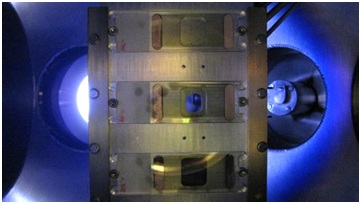 Norwegian company EnSol has patented a prototype thin film solar cell technology designed to be sprayed onto any glass surface. If this technology works as planned, it could take away the need to install big solar panels on rooftops, particularly in industrial settings.
Unlike traditional silicon-based solar cells, EnSol's film uses metal nanoparticles embedded in a transparent composite matrix. Ensol's collaboration with the University of Leicester's Department of Physics and Astronomy could see the product commercialised by 2016.
Norwegian company EnSol has patented a prototype thin film solar cell technology designed to be sprayed onto any glass surface. If this technology works as planned, it could take away the need to install big solar panels on rooftops, particularly in industrial settings.
Unlike traditional silicon-based solar cells, EnSol's film uses metal nanoparticles embedded in a transparent composite matrix. Ensol's collaboration with the University of Leicester's Department of Physics and Astronomy could see the product commercialised by 2016.What businesses can learn from non-profits — March 1, 2010
 We’ve had the privilege of working with many non-profits, applying business principles to various non-profit workstreams. For instance, non-profit agencies such as the World Food Programme or WaterAid transporting food and water to rural regions, routinely benefit from the supply chain technologies and practices of the major logistics firms in the world.
Disaster relief agencies such as Red Cross or Mercy Relief practice principles such as triage from the medical sector or and the 80/20 rule when working in time- and mission-critical interventions. Similarly business analyses of market sizes, ‘donation channels’, ‘philanthropist intelligence’, and even ‘competitive analysis’ have helped organisations like UNICEF and WorldVision create greater impact in their marketing and fundraising.
We’ve had the privilege of working with many non-profits, applying business principles to various non-profit workstreams. For instance, non-profit agencies such as the World Food Programme or WaterAid transporting food and water to rural regions, routinely benefit from the supply chain technologies and practices of the major logistics firms in the world.
Disaster relief agencies such as Red Cross or Mercy Relief practice principles such as triage from the medical sector or and the 80/20 rule when working in time- and mission-critical interventions. Similarly business analyses of market sizes, ‘donation channels’, ‘philanthropist intelligence’, and even ‘competitive analysis’ have helped organisations like UNICEF and WorldVision create greater impact in their marketing and fundraising. Read more...
