Social Innovation Trend Canvas
-
Understanding the Emerging Middle Class — September 2, 2011
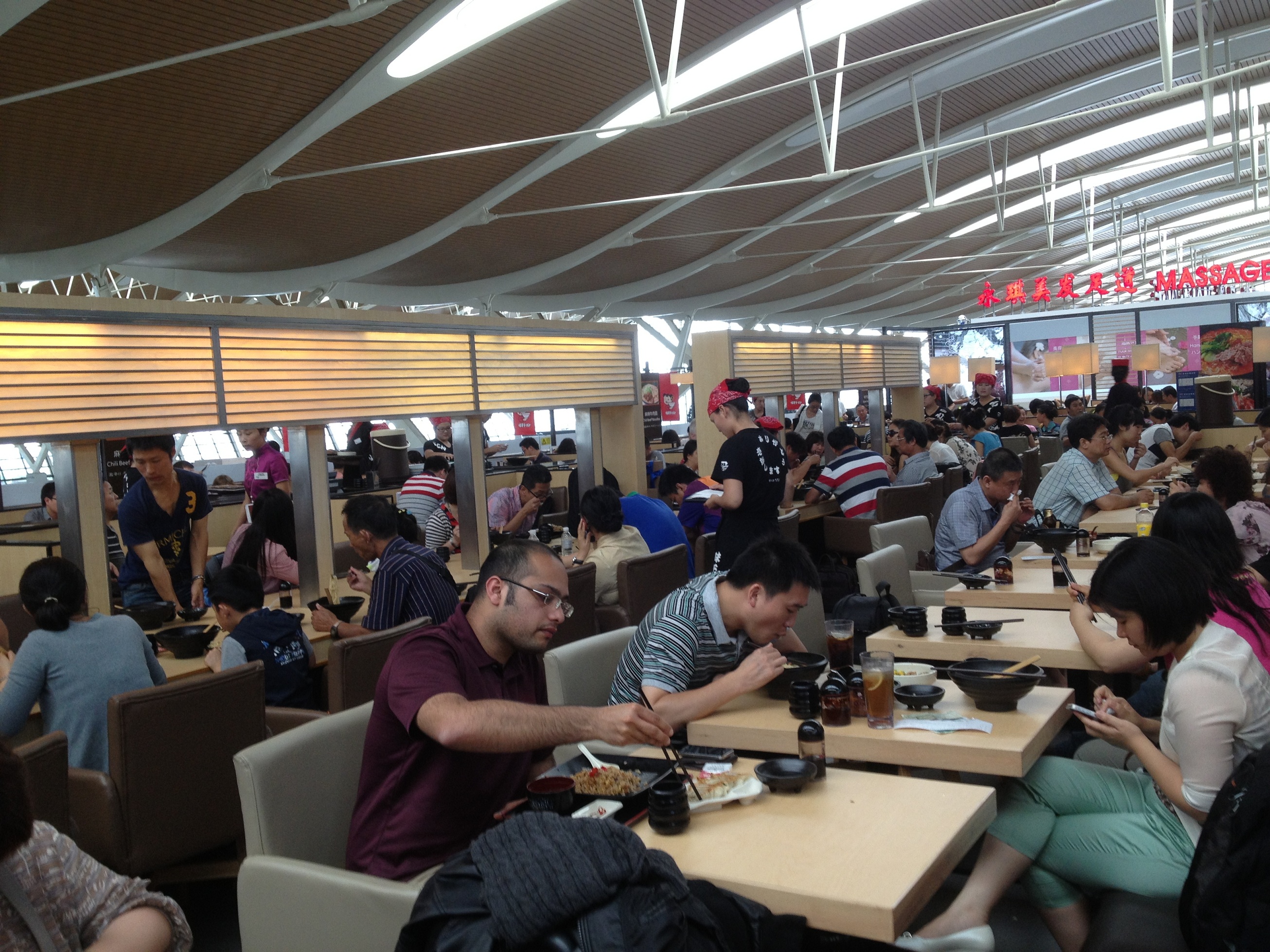 Emerging Middle Class (EMC) consumers represent the next driver of demand for multinational companies. Depending on the income definitions used, there are over three billion EMC consumers expected by 2020, with China and India alone accounting for one billion then. EMC consumers make an income of USD2 – 50 per day usually from working in the informal sector, and with rapid urbanization are just starting to exercise their spending power.
Some companies starting to target the EMC with low-cost products and services do not experience success as affordability alone does not meet the growing expectations of the EMC consumer.
The EMC consumer works within a budget constraint for the same performance expectations.
Emerging Middle Class (EMC) consumers represent the next driver of demand for multinational companies. Depending on the income definitions used, there are over three billion EMC consumers expected by 2020, with China and India alone accounting for one billion then. EMC consumers make an income of USD2 – 50 per day usually from working in the informal sector, and with rapid urbanization are just starting to exercise their spending power.
Some companies starting to target the EMC with low-cost products and services do not experience success as affordability alone does not meet the growing expectations of the EMC consumer.
The EMC consumer works within a budget constraint for the same performance expectations. Read more...
Sunny outlook for China’s solar leadership — April 15, 2011
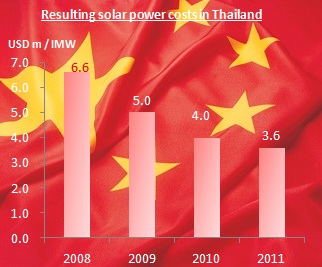 While Germany continues its leadership in new solar technology development, China, the world’s largest energy consumer, has recently achieved a global solar market share of 50%.
China has previously used feed-in-tariffs to successfully develop the biggest wind power industry in the world. It is expected to soon announce a nationwide feed-in-tariff scheme for solar power.
While Germany continues its leadership in new solar technology development, China, the world’s largest energy consumer, has recently achieved a global solar market share of 50%.
China has previously used feed-in-tariffs to successfully develop the biggest wind power industry in the world. It is expected to soon announce a nationwide feed-in-tariff scheme for solar power.
Read more...
China’s Great Leap to Green — March 9, 2011
 China is the world’s largest emitter of carbon dioxide, with carbon emissions that increased by 32.5 per cent between 2006 and 2009.
To address this, Beijing has launched an ambitious program to close factories which do not meet emissions targets, develop its low carbon-economy, and create high-value jobs to power its economy, similar to that observed in the Obama administration. As part of its social security policy, China recognises that intense pollution and several poisoning incidents have led to unrest in many parts of the country.
China is the world’s largest emitter of carbon dioxide, with carbon emissions that increased by 32.5 per cent between 2006 and 2009.
To address this, Beijing has launched an ambitious program to close factories which do not meet emissions targets, develop its low carbon-economy, and create high-value jobs to power its economy, similar to that observed in the Obama administration. As part of its social security policy, China recognises that intense pollution and several poisoning incidents have led to unrest in many parts of the country.
Read more...
SE Asia’s race towards clean energy — February 27, 2011
 In the Asia-Pacific region, the SE Asia countries have traditionally been overshadowed by clean energy funds flowing into China and India, but recent developments are putting them into a new investment spotlight.
In Nov 2010, Norway's Renewable Energy Corp (REC) announced the opening of one of the world's largest integrated solar plants in Singapore. The $2.5bn complex, Singapore's largest cleantech investment to date, sits on a 321,000 sq m site, produces over 190,000 solar modules monthly, and will employ a 1,700 workforce. This will initially provide 740MW of solar wafers, 550MW of solar cells, and 590MW of solar modules annually.
In the Asia-Pacific region, the SE Asia countries have traditionally been overshadowed by clean energy funds flowing into China and India, but recent developments are putting them into a new investment spotlight.
In Nov 2010, Norway's Renewable Energy Corp (REC) announced the opening of one of the world's largest integrated solar plants in Singapore. The $2.5bn complex, Singapore's largest cleantech investment to date, sits on a 321,000 sq m site, produces over 190,000 solar modules monthly, and will employ a 1,700 workforce. This will initially provide 740MW of solar wafers, 550MW of solar cells, and 590MW of solar modules annually.
Read more...
Frugal Innovation hits SE Asia’s automotive sector — February 16, 2011
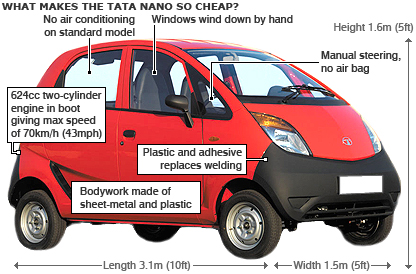 Asian countries are leading the advance of Frugal Innovation - also known as Constraint-Based Innovation - to tap into the immense potential of its bottom-of-pyramid populations. P&G & Hindustan Unilever first introduced single serve sachets to meet the needs of emerging market consumers who could not otherwise afford entire bottles of shampoo, washing powder, or deodorant sticks. 'Sachet Marketing', quickly adopted by Reliance Telecoms, led to an explosion of India's pre-paid mobile market. Companies such as Haier and Tata Consultancy Services then made waves with new 'thrift-engineered' product designs, low-priced material sourcing, lean production processes, unconventional distribution channels to reach rural populations, as well as new revenue and financing models. International firms such as Nokia and GE have since jumped in with low cost handsets and ECG devices. Frugal innovation has paved the way for the introduction of Godrej & Boyce Manufacturing's $70 fridge, Quanta's $150 laptop, and Tata Motors' $2,500 Nano car (see insert).
Read more...
Tissue engineering for human regeneration — February 5, 2011
 Tissue engineering is emerging as a multidisciplinary field in healthcare which combines biomaterials, engineering design, informatics, medicine, and the life sciences to create biological substitutes that restore, maintain, grow, or improve tissue function or a whole organ. It involves principles such as cell extraction and manipulation, biocompatibility, culture, and synthesis.
Innovations in this field have been made in developing tissue for bone and bone marrow, cartilage, blood, as well as organs such as the bladder, heart, liver, and pancreas. The most recent breakthrough was just seen in The University of Pittsburgh's McGowan Institute for Regenerative Medicine, where doctors have successfully introduced a gun that sprays stem cells onto damaged skin.
In this revolutionary process, stem cells are first isolated and harvested from healthy skin, placed in a water solution, sprayed on damaged skin, aqnd dressed in amino acids, antibiotics, electrolytes, glucose, and sugar. The 90-minute procedure has been trialed on a dozen burn patients, and results have shown that as compared to the standard healing period of weeks or months using traditional skin culture, the skin spray gun has completely healed severe burns within a few days.
Tissue engineering is emerging as a multidisciplinary field in healthcare which combines biomaterials, engineering design, informatics, medicine, and the life sciences to create biological substitutes that restore, maintain, grow, or improve tissue function or a whole organ. It involves principles such as cell extraction and manipulation, biocompatibility, culture, and synthesis.
Innovations in this field have been made in developing tissue for bone and bone marrow, cartilage, blood, as well as organs such as the bladder, heart, liver, and pancreas. The most recent breakthrough was just seen in The University of Pittsburgh's McGowan Institute for Regenerative Medicine, where doctors have successfully introduced a gun that sprays stem cells onto damaged skin.
In this revolutionary process, stem cells are first isolated and harvested from healthy skin, placed in a water solution, sprayed on damaged skin, aqnd dressed in amino acids, antibiotics, electrolytes, glucose, and sugar. The 90-minute procedure has been trialed on a dozen burn patients, and results have shown that as compared to the standard healing period of weeks or months using traditional skin culture, the skin spray gun has completely healed severe burns within a few days.Japan to invest $1.5bn in green cities in Asia — January 8, 2011
 Japan’s Innovation Network Corp of Japan, a public-private network, is financially backing its companies with JPY 130bn to build smart and green cities, communities with low pollution and renewable energies with efficient and clean power supplies, housing, public transport, and water and sewerage systems.
The Ministry of Economy, Trade and Industry has set aside JPY40bn within its investment and loan programme for smart community development abroad this year. Innovation Network will first provide JPY10bn to a special-purpose consortium that includes Mitsubishi Heavy Industries, Mitsubishi Corp and Electric Power Development, which will sign an initial agreement with India this month to build solar power facilities, water processing and urban transport systems in Gujarat.
Other key markets of special interest to the Innovation Network include China, Indonesia, and Vietnam.
Japan’s Innovation Network Corp of Japan, a public-private network, is financially backing its companies with JPY 130bn to build smart and green cities, communities with low pollution and renewable energies with efficient and clean power supplies, housing, public transport, and water and sewerage systems.
The Ministry of Economy, Trade and Industry has set aside JPY40bn within its investment and loan programme for smart community development abroad this year. Innovation Network will first provide JPY10bn to a special-purpose consortium that includes Mitsubishi Heavy Industries, Mitsubishi Corp and Electric Power Development, which will sign an initial agreement with India this month to build solar power facilities, water processing and urban transport systems in Gujarat.
Other key markets of special interest to the Innovation Network include China, Indonesia, and Vietnam.
China Makes Nuclear Fuel Breakthrough — January 3, 2011
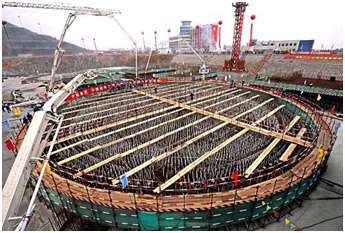 Chinese scientists have made a breakthrough in spent fuel reprocessing technology that could potentially solve China's uranium supply problem. The technology, developed and tested at the No.404 Factory of China National Nuclear Corp in the Gobi desert in remote Gansu province, enables the re-use of irradiated fuel and is able to boost the usage rate of uranium materials at nuclear plants by 60 folds. China, as well as France, the United Kingdom and Russia, actively supports reprocessing as a means for the management of highly radioactive spent fuel and as a source of fissile material for future nuclear fuel supply.
Read more...
Siemens Invests in Expanding Wind Power — January 3, 2011
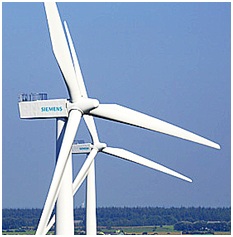 Siemens got into the wind business only in 2004, when it acquired a maker of wind turbines in Brande, Denmark, which remains the headquarters of the wind unit. In 2009, Siemens acquired Solel, an Israeli company that makes components for plants that use concentrated heat from the sun to generate power. And last February, Siemens acquired a minority stake in Marine Current Turbines, a British company that makes equipment for generating electricity from ocean tides.
 Read more...
Reviving the carbon market — January 1, 2011
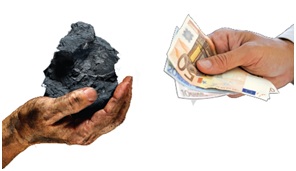 2010 has not been a good year for the carbon markets. The cap and trade system at the Chicago Climate Exchange has just closed, and the US Congress and the Obama administration gave up on a national cap-and-trade policy. Fortunately, European carbon markets remained active and the Western Climate Initiative, a cap-and-trade program, which includes several Western states and Canadian provinces, continues on its planned launch in 2012.
Read more...
