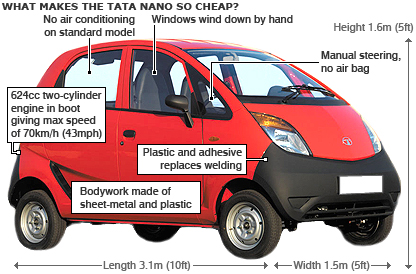
 Asian countries are leading the advance of Frugal Innovation – also known as Constraint-Based Innovation – to tap into the immense potential of its bottom-of-pyramid populations. P&G & Hindustan Unilever first introduced single serve sachets to meet the needs of emerging market consumers who could not otherwise afford entire bottles of shampoo, washing powder, or deodorant sticks. ‘Sachet Marketing’, quickly adopted by Reliance Telecoms, led to an explosion of India’s pre-paid mobile market. Companies such as Haier and Tata Consultancy Services then made waves with new ‘thrift-engineered’ product designs, low-priced material sourcing, lean production processes, unconventional distribution channels to reach rural populations, as well as new revenue and financing models. International firms such as Nokia and GE have since jumped in with low cost handsets and ECG devices. Frugal innovation has paved the way for the introduction of Godrej & Boyce Manufacturing’s $70 fridge, Quanta’s $150 laptop, and Tata Motors’ $2,500 Nano car (see insert).
Squeezed by intense competition in the mid-market segment, automotive majors recognise the massive potential in frugal innovation, and are jumping into the fray. Chrysler and Chery have joined forces to develop a low-priced car, while GM Daewoo and Hyundai are also developing model aimed at the $7,000 price point. Geely has a model at $3,900, Hyundai at $6,300, and Suzuki for $4,400 in India. Renault has successfully launched its $7,200 Logan sedan, and is developing a $3,000 car for Asia to be built in India and targeting the BRIC countries.
The latest to enter this market is Toyota and its Daihatsu unit, which has just announced plans to build a low cost car in Indonesia targeting middle-market consumers in Southeast-Asia and priced at around $10,000. Its $250mn factory aims to production in 2013 with 50,000 units, and reach a capacity of 100,000 units per year. These exports are expected to significantly drive growth in Indonesia’s automotive sector, while pundits are concerned that the influx of low-priced cars will further inflate oil prices.
Frugal innovation is not only opening up a market of hundreds of millions of potential new customers in emerging markets, but exports of these cars will rapidly find their way into European and US markets. Global players will soon realise new outsourcing and insourcing opportunities by transfering learnings in product development, safety standards, materials management, supply chain management, and business model design to the rest of their product portfolio.
